In early April 1764, twenty Acadians reached New Orleans. They had been released from exile in New York and had stopped at Mobile on the way. Colonial officials settled them on the Mississippi above the city, near the present line between St. John and St. James parishes.
The historian Carl A. Brasseaux, writing for the Acadian Memorial, does not give the exact day. He gives the number. Twenty.
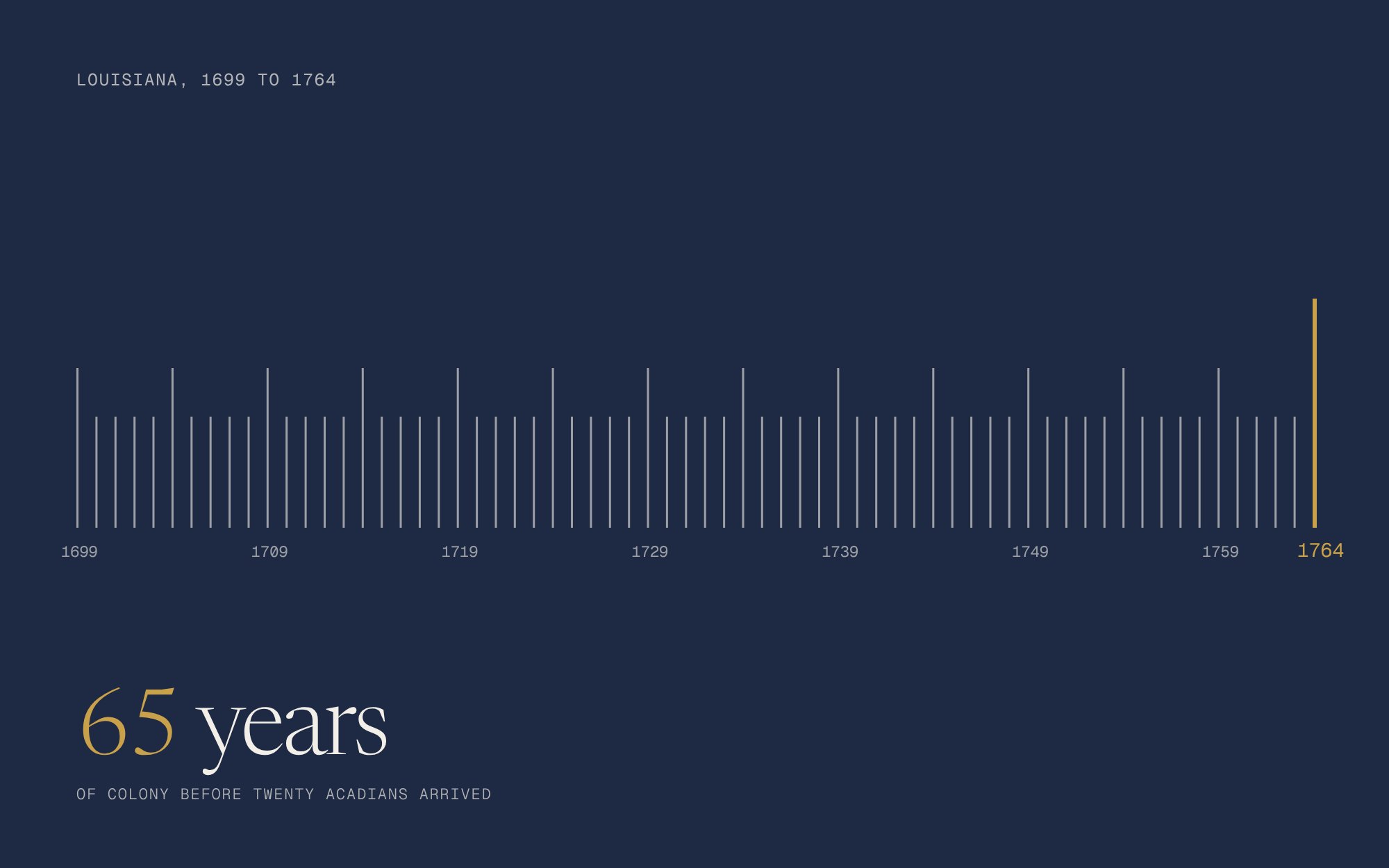
Sixty-five years earlier
On March 2, 1699, Pierre Le Moyne d'Iberville's expedition located the mouth of the Mississippi. On March 17 his party noted a pole marking the hunting boundary between the Bayogoula and the Houma. The land already had owners, and the owners had already drawn the lines.
On April 8, 1699, Iberville chose a site on Biloxi Bay for Fort Maurepas, the first French post of the colony.
The colony in the 1740s
The Code Noir for Louisiana, dated March 1724, set the laws for enslaved people. Article L required the Superior Council's permission for any manumission. Article LIV gave freed people the same rights as people born free.
64 Parishes, the encyclopedia of the Louisiana Endowment for the Humanities, gives a 1746 estimate of about 3,200 whites and 4,730 people of African descent. By the early 1740s, about two-thirds of the roughly 4,000 enslaved people in lower Louisiana had been born in the colony. In the colony's own usage, a person born there was a Creole.
By the end of French rule, free Black people numbered barely 200, according to the Library of Congress.
The word Creole was in use in Louisiana before the first Acadian arrived. It meant born here.
After the twenty
In late February 1765, 193 Acadians from Halifax arrived under Joseph Broussard dit Beausoleil. Officials sent them to the Attakapas District. Between May and October 1785, 1,596 Acadians sailed from French ports on seven ships chartered by Spain, the largest single Acadian migration to Louisiana. By then the colony was 86 years old.
How we reported this
Built from the Acadian Memorial's account by Carl A. Brasseaux, 64 Parishes, the BlackPast translation of the 1724 Code Noir and the Library of Congress's France in America text. The 1746 estimate appears in 64 Parishes; we are still looking for the original count.
Sources
- Acadian Immigration Into South Louisiana, 1764-1785Acadian Memorial (Carl A. Brasseaux)
- Pierre Le Moyne d'Iberville64 Parishes
- Louisiana's Code Noir (1724)BlackPast.org
- French Colonial Louisiana64 Parishes
- Free People of Color in Louisiana: TerminologyLSU Libraries Special Collections
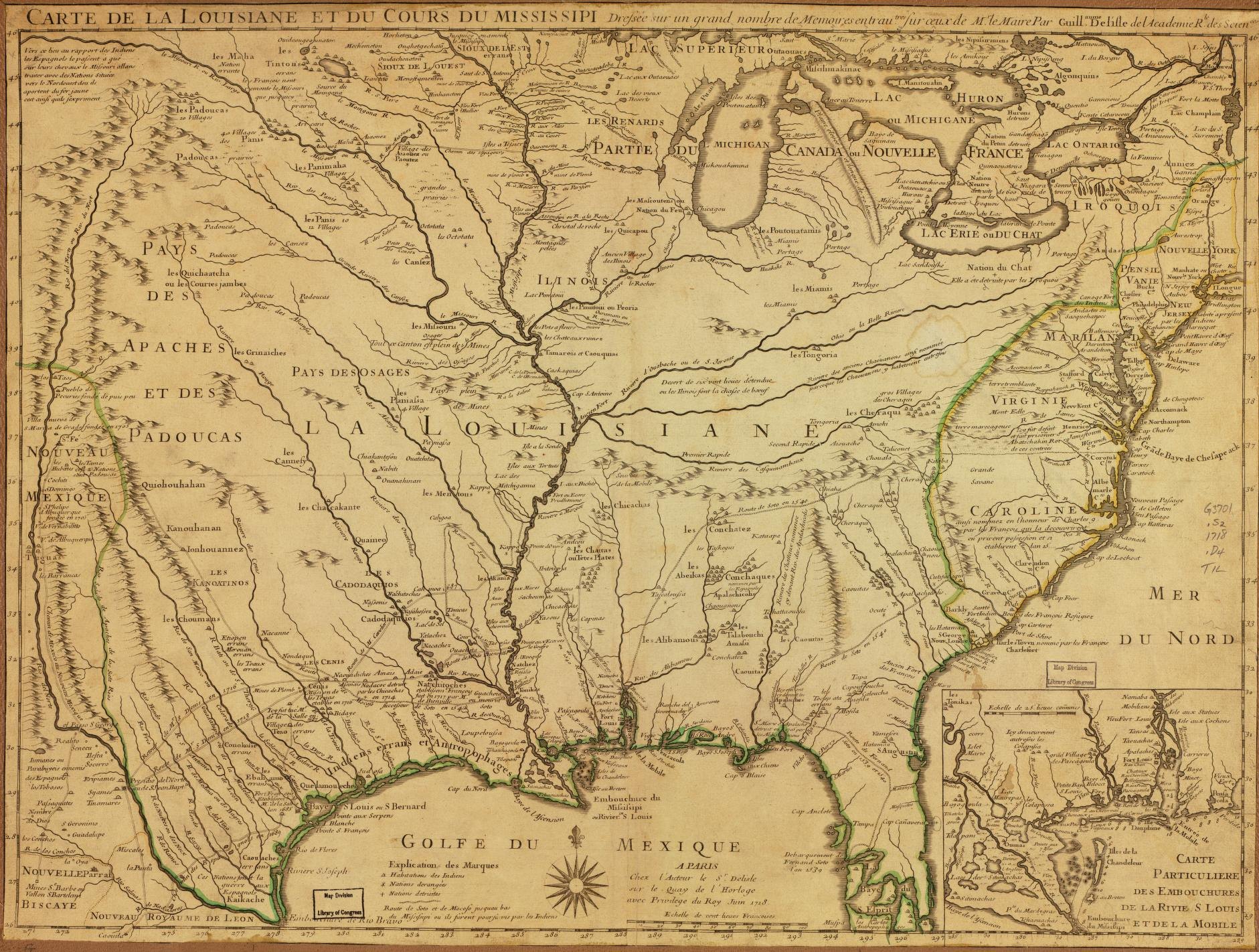
- Carte de la Louisiane et du cours du Mississipi (1718)Library of Congress, Geography and Map Division
See an error? Send a correction. Corrections run as visibly as the claim.